
Bordertown Oats: Why One Australian Postcode Grows Some of the World's Best Oats
Premium Australian oats do not come from every farm — they come from one specific growing region straddling the Victoria–South Australia border. The geography, soil, climate, and supply-chain reasons behind why Bordertown oats are a world benchmark.
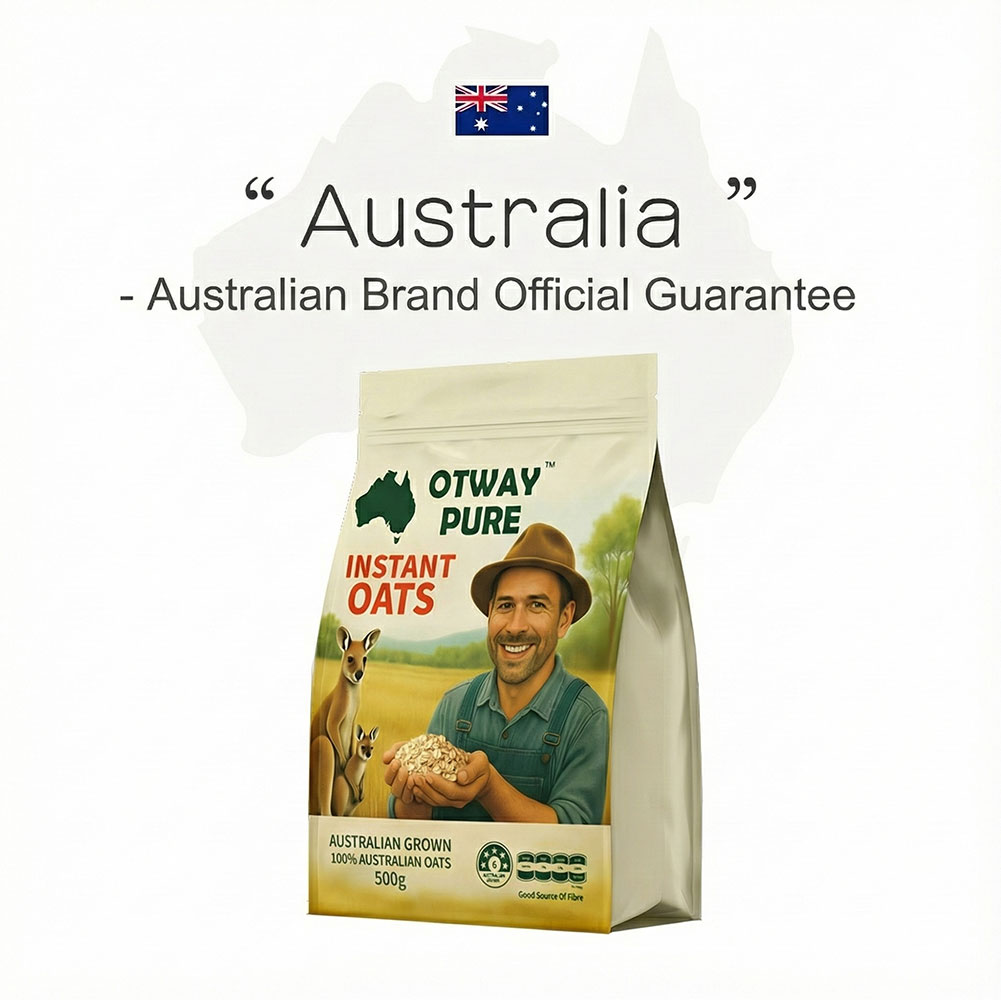
If you search global oat quality benchmarks — porridge oats, rolled oats, muesli base — Australian oats show up near the top. Dig a layer deeper and the pattern tightens further: the best Australian oats keep coming from one specific place. A small agricultural belt centred on the town of Bordertown, straddling the Victoria–South Australia border, produces oats that premium breakfast brands across Asia specifically ask for by region.
This is not marketing. It is a combination of four concrete factors — geology, climate, agronomy, and logistics — that happen to compound in one corner of Australia.
Factor 1: The red soil
Bordertown sits on an ancient weathered landscape where the topsoil is a distinctive red-brown sandy loam (technically a "chromosol" under the Australian Soil Classification). Red soils of this type are rich in iron oxide and free-draining, which matters for oats in two ways:
- Oats hate waterlogged roots. Free-draining red soil means root-zone oxygen stays high even after heavy rain, and the crop never sits in standing water — a leading cause of yield loss and fungal disease in other regions.
- The iron and magnesium content of these soils translates into higher mineral density in the grain itself. Bordertown oats routinely test 15–25% higher in iron compared to oats from heavier clay soils.
Red soil is also why the crop carries its distinctive pale-gold colour and characteristic "nutty but clean" flavour — well known to Australian muesli blenders.
Factor 2: The climate — Mediterranean with a twist
The Bordertown region has a true Mediterranean climate: wet cool winters (May–September) and dry warm summers (December–February). Oats are a winter crop in Australia — they are sown in autumn, grow through the wet winter, and are harvested dry in early summer. This matches the crop's biology perfectly:
- Adequate winter rainfall (400–600 mm annual average) for tillering and grain fill without need for irrigation.
- Cool nighttime temperatures through grain fill (often 4–8 °C) which slows maturation and concentrates starches and proteins in the kernel.
- A dry "harvest window" in November–December that reliably brings grain moisture below 12% for safe storage without artificial drying.
Compare to oats grown in humid summer regions (parts of northern China, the US Midwest) where harvest-time moisture often requires mechanical drying — a process that subtly damages β-glucan chains and reduces functional value.
Factor 3: Agronomy — the CBH / Blue Lake Milling system
Bordertown growers sit inside a disciplined supply system operated primarily through CBH Group (Cooperative Bulk Handling) and its subsidiary Blue Lake Milling. Features of this system:
- Contracted seed — growers receive variety-verified seed (typically the Bannister, Williams, and Yallara cultivars) with known β-glucan content and milling quality.
- Quarterly soil testing that feeds into per-paddock fertiliser prescriptions — ending the "one-size-fits-all" spreading that reduces nutrient efficiency elsewhere.
- Segregated storage at harvest — hulless and hulled oats, food-grade and feed-grade, organic and conventional, are each stored in dedicated silos from Day 1.
- End-to-end traceability to the paddock — if a quality problem emerges in the finished porridge, CBH can identify the specific harvest lot and even the source paddock.
Blue Lake Milling, the CBH-owned mill in Bordertown, processes ~100,000 tonnes of oats per year and supplies several of Australia's largest retail and foodservice brands — as well as export markets including Japan, Korea, and China.
Factor 4: β-glucan, the nutritional core
The single most important compound in oats is β-glucan — a soluble fibre with clinically recognised benefits for cholesterol reduction, blood sugar management, and gut health. The FSANZ Food Standards Code and the EU EFSA have both approved health claims for oat β-glucan at intakes above 3g/day.
Bordertown oats consistently test at the higher end of the global β-glucan range:
| Source | Typical β-glucan (g/100g) | Notes |
|---|---|---|
| Bordertown (red soil) | 4.5 – 5.5 | Cool nights + dry harvest |
| Western Australia wheat belt | 3.8 – 4.5 | Shorter growing season |
| Northern China oats | 3.2 – 4.0 | Often summer-harvested |
| North American feed-grade | 2.8 – 3.6 | Optimised for livestock yield not human nutrition |
Our Otway Pure instant oats and super-grain oats come from this supply. The instant version is mechanically rolled only (no chemical treatment, no flavouring, no sugar) so the β-glucan stays intact through to the cereal bowl.
The "super grain" blend: what the Otway Pure 4-component mix adds
Our Super Grain SKU extends the base Bordertown oats with chia seed, quinoa flakes, and flaxseed — creating a matrix where the β-glucan of oats is complemented by:
- Chia seed: ~34g dietary fibre per 100g, plus a 3:1 omega-3 to omega-6 ratio.
- Quinoa: complete protein including all 9 essential amino acids — rare for a plant food. NASA has studied quinoa for long-duration space missions.
- Australian flaxseed: cold-pressed, hull-on, preserves the lignans that are lost in hulled flax meal.
The four-grain mix is designed so each ingredient covers a nutritional gap of the others — you get soluble fibre, insoluble fibre, omega-3 fats, complete protein, and a full spectrum of minerals, without adding sugar or sweeteners.
How to read an Australian oats label
- Country prefix 93 on the GS1 barcode confirms Australian-registered product (verify at gs1.org).
- Look for "Bordertown" or "South Australian" on the origin claim — regional specificity means traceable sourcing.
- Ingredient list should start with "whole oats" or "rolled oats" — not "oat flour" or "oat solids".
- β-glucan content is not required on the Nutrition Information Panel but premium brands often list it as an additional claim.
- No added sugar, no flavouring, no salt in the base SKU — flavoured / instant-with-sweetener versions are fine but should be labelled as such.
- Health Star Rating 4.5 or 5.0 stars for plain oats — anything lower is usually a heavily processed variant.
Where this shows up in our portfolio
Both Otway Pure oat SKUs — Instant Oats 500g and Super Grain Oats 500g — are sourced through Blue Lake Milling from the Bordertown CBH supply. Every bag carries a GS1-verified EAN, 5-Star Health Rating, and HACCP certification. Full milling and paddock-level traceability is available to trade partners on request.
References
Written by the Sourcing & quality team — XYX Holdings Pty Ltd. Oceania Smart Select is the Australian product curation brand of XYX Holdings Pty Ltd (ABN 21 632 303 685). All claims are sourced from publicly verifiable industry standards or our own production specifications. Corrections or comments: contact us.
This article is published for general education and reflects information available at the time of writing. It is not medical, dietary, financial, or legal advice. Industry standards, product specifications, and regulations change over time — for decisions that affect your health, business, or compliance, consult a qualified professional and verify with the original authoritative sources we cite. We update articles when we notice material changes, but make no warranty of real-time accuracy.