GS1 Barcode Prefix 93: The Complete Guide to Verifying an Australian Product
Anyone can print "Made in Australia" on a label — but only an Australian-licensed company can issue an EAN-13 barcode that starts with 93. Here is how the system works, what the digits mean, and how to verify any "Australian" product in under 30 seconds.
The barcode on the back of every retail product encodes more than just a price. The first three digits are a country prefix issued by GS1, the global standards organisation that runs the EAN/UPC system. For Australian-licensed products that prefix is 93. A bottle of milk made in Melbourne by a GS1 Australia member will start with 93. A bottle of milk made in China but sold under an "Australian-style" brand will not — it will start with 690–699 (China) or whatever country issued its license.
What the 13 digits actually mean
EAN-13 (which Google often calls GTIN-13 in structured data) splits into four logical parts:
| Position | Length | Meaning | Example (931...) |
|---|---|---|---|
| 1–3 | 3 digits | GS1 country prefix — identifies the licensing GS1 office | 931 → GS1 Australia |
| 4–9 (or 4–8/4–7) | Variable | Company prefix — identifies the brand owner | 95557 → Dairy-Pac International |
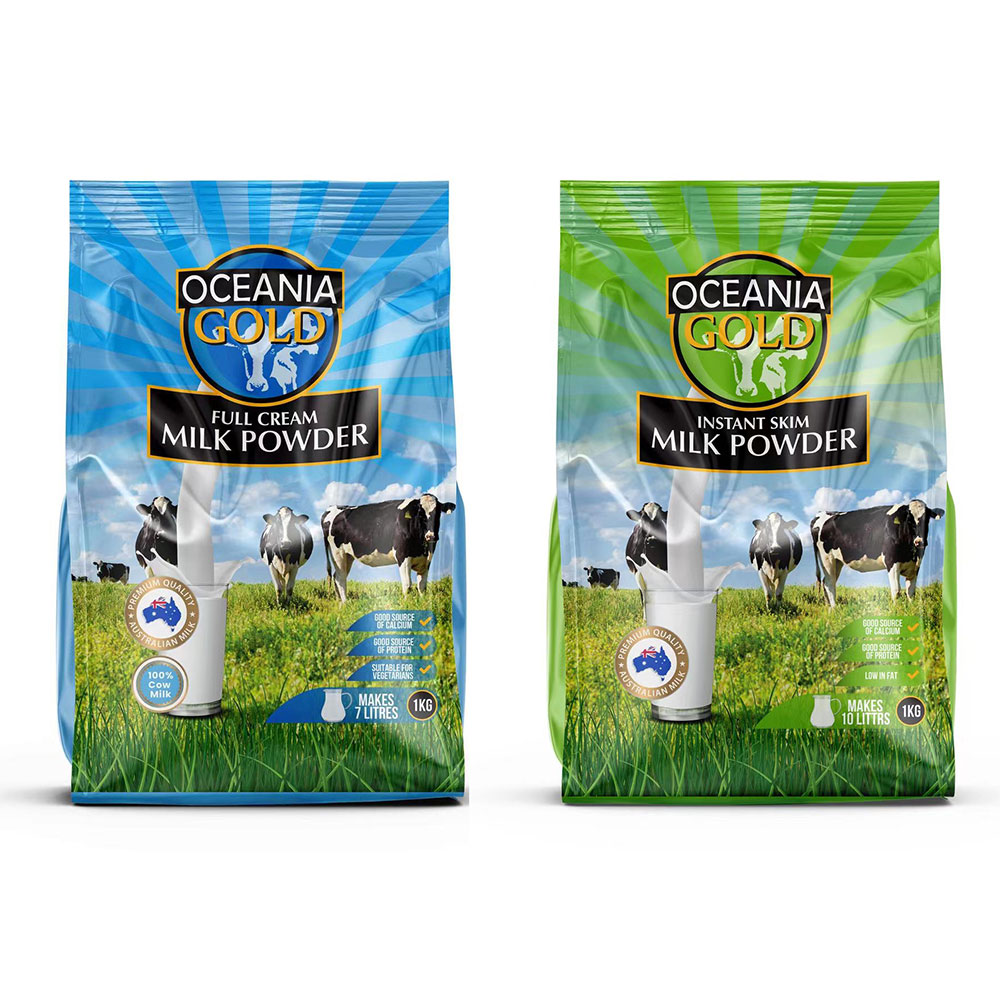
| Next | Variable | Item reference — the manufacturer's product number | 00025 → Full Cream Milk Powder 1kg |
| Last | 1 digit | Check digit — calculated from the previous 12 | 8 |
A real example: 9 355557 000258. The first 3 digits (935 — yes, 93 family with regional sub-allocation) tell you GS1 Australia issued this number. The middle digits identify Dairy-Pac International, our manufacturing partner. The last digit is a checksum.
Common myths about prefix 93
Myth: "Prefix 93 means manufactured in Australia"
Strictly, 93 means the brand owner registered with GS1 Australia. The product is usually but not always physically made in Australia. A multinational with an Australian subsidiary could in theory issue 93 codes for products made anywhere. To prove physical Australian origin, look at the "Made in Australia" claim under the AANZFTA rules and the country-of-origin labelling on the package.
Myth: "If the barcode scans, it must be real"
Any 12-digit number plus a valid check digit will scan. The check digit only catches typos, not forgery. Real verification requires looking up the GTIN against the GS1 database — that is what gs1.org's Verified by GS1 service does.
Myth: "Prefix 93 products are automatically high quality"
No. Prefix 93 is a registration mark, not a quality mark. It tells you the brand owner has paid GS1 Australia's annual licensing fee and committed to keeping their product information accurate. Quality is a separate question (BRC, GMP, NASAA, HACCP, etc.).
How to verify in under 30 seconds
- Read the 13 digits from the barcode on the package (or use any free barcode-scanner app on your phone).
- Confirm the first 3 digits are 93x. If not, the product is not registered through GS1 Australia.
- Open https://gs1.org/services/verified-by-gs1 in your browser.
- Paste the full 13-digit number. The Verified by GS1 service returns the brand owner name and country of GS1 license. If the brand name matches what is on the package and the country is Australia, you have a match.
- For an extra layer, look up the brand owner's ABN on https://abr.business.gov.au — every legitimate Australian company is listed.
If the GS1 lookup returns "no record" or returns a different brand owner than what the package claims, you are looking at either a counterfeit, a relabelled product, or a parallel import that did not register correctly. Report it to GS1 Australia.
Why this matters more for cross-border trade
In the cross-border e-commerce world — particularly for Australian dairy and skincare exported to China — counterfeiting and relabelling are persistent risks. Chinese consumers and customs authorities routinely scan barcodes to verify authenticity. A product that fails GS1 verification at the Bonded Zone customs check can be detained or destroyed.
For us, this means every product page on this site states the EAN-13. Buyers can verify any of our 22 SKUs in under 30 seconds before placing an order. We also publish the manufacturer name and ABN, so you can verify the entity behind the brand.
A worked example with one of our products
What to demand from any "Australian" product supplier
- EAN-13 starting with 93x, retrievable from gs1.org's Verified by GS1 service.
- Brand owner name on the GS1 record matching the package label.
- Australian company ABN, verifiable on the public Australian Business Register.
- Australian Certificate of Origin (issued by the Australian Chamber of Commerce or equivalent).
- Manufacturer name and full physical address — not just a P.O. box.
- Recent third-party certification documents (BRC, GMP, HACCP — depending on category).
Any supplier that hesitates on any of these is not a serious supplier. Any supplier that produces all six in writing is operating to international export-grade standards.
References
Written by the Sourcing & quality team — XYX Holdings Pty Ltd. Oceania Smart Select is the Australian product curation brand of XYX Holdings Pty Ltd (ABN 21 632 303 685). All claims are sourced from publicly verifiable industry standards or our own production specifications. Corrections or comments: contact us.
This article is published for general education and reflects information available at the time of writing. It is not medical, dietary, financial, or legal advice. Industry standards, product specifications, and regulations change over time — for decisions that affect your health, business, or compliance, consult a qualified professional and verify with the original authoritative sources we cite. We update articles when we notice material changes, but make no warranty of real-time accuracy.