
Wet-Mix vs Dry-Mix: How Australian Milk Powder Manufacturing Affects Nutrition
The single biggest determinant of milk powder quality is not the cow — it is the processing route from fresh milk to finished tin. Wet-mix retains heat-sensitive nutrients that dry-mix can never recover. Here is the engineering, the data, and how to read a label.
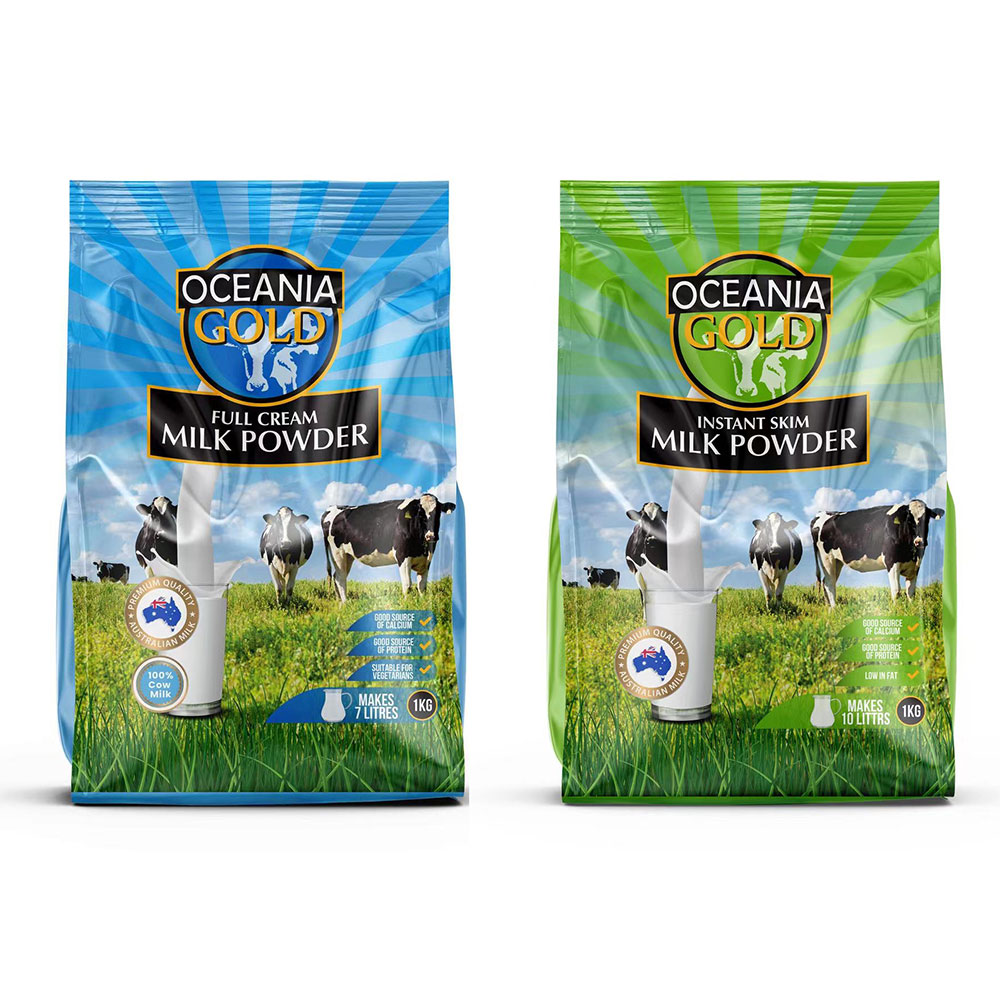
Anyone shopping for premium milk powder eventually runs into two terms: "wet-mix" and "dry-mix." Marketing copy tends to call wet-mix "better," but rarely explains why. The honest answer is that they are two different industrial processes that start from different raw materials and finish with measurably different nutritional and physical properties. If you only remember one thing: wet-mix preserves nutrients that exist in liquid milk; dry-mix can only blend what is already powdered. The order matters.
The two processes, in plain English
Wet-mix (also called "fresh wet blending")
Fresh raw milk arrives at the factory in chilled tankers, usually within hours of milking. Liquid additions — concentrated whey protein, vitamin pre-mixes, mineral salts, lecithin — are dosed directly into the liquid milk while it is still in tank form. The blended liquid is then homogenised, briefly pasteurised, and finally sent through a spray dryer: a tower in which atomised droplets meet hot air and instantly become powder particles.
The defining characteristic of wet-mix is that every nutrient experiences the heat step exactly once, and only briefly (seconds inside the dryer at carefully controlled inlet/outlet temperatures, typically 165–185 °C inlet but particle core temperatures stay much lower because of evaporative cooling). The result is a uniformly distributed, single-batch powder.
Dry-mix (also called "instant blending")
Bulk skim milk powder or whole milk powder — already spray-dried, often months earlier in a different facility — is mechanically blended in a ribbon or paddle mixer with dry vitamin/mineral pre-mixes and any other dry additions (cocoa, sweeteners, etc.). No re-heating. No second drying. The base milk powder has already gone through the entire spray-drying cycle once.
Dry-mix is faster, cheaper, more flexible, and works well for many applications (instant chocolate drinks, bakery pre-mixes, large-volume infant formula bases). It is also the only economical way to make a multi-ingredient formulation when the formulator does not own a spray dryer.
Why wet-mix matters nutritionally
Three classes of compounds in milk are sensitive to processing history: whey proteins, vitamins, and lipid-bound bioactives. The longer they sit in storage between processing steps, and the more times they cross the heat threshold, the more degradation accumulates.
Whey protein denaturation
Whey proteins (β-lactoglobulin, α-lactalbumin, immunoglobulins, lactoferrin) start to unfold above 65 °C. Single-pass wet-mix exposes them to heat once. Dry-mix uses a base powder that already went through spray drying — and if that base was sitting in a silo for two months at 25 °C, the cumulative protein denaturation is measurably higher even before the dry blend happens.
Heat-labile vitamins
Vitamin C and folate are the most fragile. Vitamin B1 (thiamine) and B12 are sensitive to both heat and oxygen. In dry-mix the vitamins are added as a separate dry pre-mix — which sounds protective but in fact means each vitamin particle sits on the surface of milk powder grains rather than being encapsulated within them. Surface vitamins oxidise faster during shelf life. Wet-mix dissolves the vitamins into the liquid first, so they end up distributed inside each spray-dried particle, with milk fat and lactose acting as a natural shield.
Mineral solubility
Calcium and iron salts dissolved in liquid milk equilibrate with the natural casein-mineral micellar structure. The same salts dry-blended on the surface remain crystalline and dissolve more slowly when reconstituted — which can cause the gritty mouth-feel in poorly dry-mixed formulas.
How Australian wet-mix is operated
In Victoria — where most premium Australian dairy is made — best-in-class wet-mix lines run on a "farm-to-powder under 2 hours" target. Raw milk is collected from certified pasture-fed herds, transported in insulated stainless tankers held at 4 °C, and routed straight into the dryer feed tank. Inlet air is filtered HEPA-grade and the dryer chamber is purged with nitrogen to suppress oxidation. Particle core temperature during drying typically peaks at 70–80 °C for under three seconds before evaporative cooling drops it back down.
OCEANIA GOLD products use this exact route through Dairy-Pac International (Thomastown, VIC). Dairy-Pac operates under BRC Global Food Safety, GMP, and NASAA Organic certifications — the audited standards required for premium Australian dairy export. Each certification can be verified independently with the issuing body.
A side-by-side data comparison
| Property | Wet-mix | Dry-mix |
|---|---|---|
| Heat exposure for additives | Once, brief (seconds) | Vitamins/minerals never see milk-protein matrix |
| Whey protein denaturation | Lower (single-pass) | Higher (base powder + storage drift) |
| Particle structure | Uniform, vitamins encapsulated | Surface coating, separable |
| Reconstitution behaviour | Smooth, no grit, fast dissolve | Variable; can show "fish-eyes" |
| Vitamin C retention (12 mo) | ~85% of label | ~60–70% of label |
| Capital cost | High (own dryer required) | Low (mixing tank only) |
| Suitable for | Premium retail, infant formula, senior nutrition | Bulk industrial, sports drinks, cocoa mixes |
These are typical industry figures; actual performance depends on the specific dryer, product matrix, and storage chain. The point is the direction of the difference, not the exact decimal point.
How to read a label and tell the difference
Labels in Australia don't always say "wet-mix" or "dry-mix" outright. Use these heuristics:
- Ingredient list is short and starts with "fresh whole milk" or "fresh skim milk" — this is consistent with wet-mix where liquid milk is the base ingredient.
- Ingredient list starts with "milk solids" or "skim milk powder" — this is dry-mix; the manufacturer is buying powdered base and re-blending it.
- Look for a stated "single-batch" or "single-source" claim — wet-mix is by definition a single batch; dry-mix typically blends several powder lots.
- Reconstitute one teaspoon in 100 ml of room-temperature water and stir for 5 seconds. Wet-mix dissolves cleanly; dry-mix usually leaves visible specks.
- Check the GS1 country code — products manufactured in Australia start with "93" on the EAN-13 barcode and can be verified at gs1.org.
Why this matters for our portfolio
Every OCEANIA GOLD dairy SKU on this site is produced via wet-mix at Dairy-Pac International. We publish the manufacturer name, the Victoria postcode of the facility, and the full ingredient declaration on every product page. We provide GS1 verification, BRC and NASAA Organic certificates, and the original Australian export documentation on request. That is what supply-chain transparency looks like in practice.
If you are a buyer, distributor, or retail partner evaluating Australian milk powder for your channel, the conversation should start with the processing route, then the herd source, then the certifications. Get those three right and the rest is execution. Get them wrong and no amount of marketing recovers it.
References
Written by the Sourcing & quality team — XYX Holdings Pty Ltd. Oceania Smart Select is the Australian product curation brand of XYX Holdings Pty Ltd (ABN 21 632 303 685). All claims are sourced from publicly verifiable industry standards or our own production specifications. Corrections or comments: contact us.
This article is published for general education and reflects information available at the time of writing. It is not medical, dietary, financial, or legal advice. Industry standards, product specifications, and regulations change over time — for decisions that affect your health, business, or compliance, consult a qualified professional and verify with the original authoritative sources we cite. We update articles when we notice material changes, but make no warranty of real-time accuracy.