Kakadu Plum: The Australian Native Fruit With 100x the Vitamin C of Oranges
Terminalia ferdinandiana — the Kakadu plum — has the highest natural vitamin C concentration ever recorded in any fruit. The story behind that number, why Indigenous Australian harvesting is part of why it stays potent, and what the data says about its skincare benefits.
The Kakadu plum (Terminalia ferdinandiana, also called gubinge or billygoat plum) grows wild across the savanna woodlands of Australia's Top End — Western Australia's Kimberley, the Northern Territory, and far north Queensland. It is a small, pale-green to yellow fruit, about the size of an olive, with a single hard stone. By appearance, nothing remarkable. By chemistry, the most concentrated natural source of vitamin C ever measured.
The 100x claim, with the actual numbers
Oranges contain roughly 50 mg of vitamin C per 100 g of fresh fruit. Lab analyses of fresh, ripe Kakadu plum consistently report 1,000–5,000 mg per 100 g — with peer-reviewed measurements in CSIRO and university labs documenting up to 5,300 mg/100 g. That is 20–100× the orange figure depending on which sample. The official Indigenous-Australian harvest specification publishes a minimum of 2,300 mg/100 g for export-grade fruit.
For comparison: blackcurrants (typically the second-richest fruit) contain 200 mg/100 g; rosehips around 426 mg/100 g; the Brazilian camu-camu around 2,800 mg/100 g. Kakadu plum is the global benchmark.
| Source | Vitamin C (mg / 100 g) | Multiplier vs orange |
|---|---|---|
| Orange (fresh) | ~50 | 1× |
| Lemon (fresh) | ~53 | 1.1× |
| Kiwifruit (fresh) | ~93 | 1.9× |
| Blackcurrant | ~200 | 4× |
| Rosehip | ~426 | 8.5× |
| Camu-camu (Brazil) | ~2,800 | 56× |
| Kakadu plum (typical) | 2,300–3,500 | 46–70× |
| Kakadu plum (peak measured) | ~5,300 | ~106× |
Why is it so high?
Two factors. First, the fruit evolved under intense UV exposure in tropical northern Australia and developed extreme antioxidant defences as protection. Second, it co-stores its vitamin C with high concentrations of polyphenols (ellagic acid, gallic acid, hydrolysable tannins) which act as natural stabilisers — slowing the oxidation of the ascorbic acid both in the fruit and, importantly, in finished cosmetic formulations.
This second point is the part that matters for skincare. Vitamin C is notoriously unstable in cosmetic formulas. Pure L-ascorbic acid degrades within weeks of bottling. Kakadu plum-derived vitamin C, packaged in its native polyphenol matrix, retains potency for 12–18 months in properly formulated products. That is why brands serious about vitamin C skincare lean on Kakadu plum extracts rather than synthesised ascorbic acid alone.
The skincare evidence
Vitamin C in skincare is one of the most evidence-supported active ingredients in dermatology. Mechanisms include:
- Inhibition of tyrosinase, the enzyme that drives melanin production — this is the basis of the brightening / hyperpigmentation claim.
- Co-factor for prolyl and lysyl hydroxylase, the enzymes required for collagen synthesis — a meaningful contribution to firmness over 8–12 weeks of consistent use.
- Direct antioxidant scavenging of reactive oxygen species generated by UV exposure — a "second-line" defence after sunscreen.
- Regeneration of oxidised vitamin E in the skin's lipid bilayer — a synergistic effect that compounds over time.
These effects are well established for any topical vitamin C above ~5% concentration at pH 2.5–3.5 (the range where L-ascorbic acid is bioavailable). Kakadu plum-based formulas typically deliver 5–20% Kakadu plum extract by mass, calibrated to a target ascorbic acid equivalent of 2–10%.
The Indigenous Australian connection
Kakadu plum has been harvested and used by Aboriginal peoples for tens of thousands of years — both as a food and for skin and wound applications. Modern commercial harvest is dominated by Indigenous-owned enterprises operating under sustainable wild-harvest protocols across the Top End. The harvest happens in the wet season (November–April), the fruit is rapidly chilled to preserve vitamin C, and the supply chain is short by design.
This matters for buyers because: (1) Indigenous-led wild harvest is the only practical source — commercial cultivation has so far failed to match wild fruit's vitamin C concentrations; (2) authentic product carries chain-of-custody documentation back to the harvest community; (3) the Australian National Standard for the Indigenous wild-harvest sector specifies maximum time from picking to chilling (under 6 hours) to preserve potency.
How it shows up in our portfolio
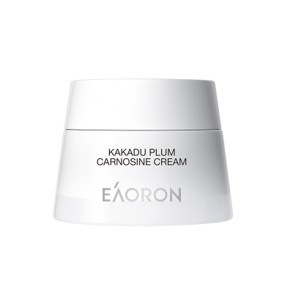
EAORON's Brightening series — the Brightening Capsules, Brightening Cream, and Kakadu Plum CC Cream — are formulated around Kakadu plum extract. The Crystal CC Cream uses a complementary niacinamide-led formulation. Both lines are manufactured in Australia under GMP. Where individual SKUs make claims that require regulatory listing, those listings are reflected on the relevant product label — refer to the packaging for any registered claim details.
Common questions
Is Kakadu plum safe in pregnancy?
Topical use of Kakadu plum-derived vitamin C is widely considered safe during pregnancy (oral high-dose vitamin C is a different question). Always defer to your healthcare provider for individual advice.
Can you eat Kakadu plum?
Yes — fresh fruit, jam, sauce, and powdered extract are all sold in Australia. The taste is sour-tart with a hint of cooked apple. As a culinary ingredient it is becoming popular in Australian fine dining.
Why is Kakadu plum more expensive than other "vitamin C" actives?
Wild harvest under Indigenous protocol, short cold-chain windows, and small global production volume (a few hundred tonnes per year). Synthetic ascorbic acid is produced in megatonnes per year in industrial fermentation plants. The cost differential reflects the supply chain, not the molecule.
References
Written by the Sourcing & quality team — XYX Holdings Pty Ltd. Oceania Smart Select is the Australian product curation brand of XYX Holdings Pty Ltd (ABN 21 632 303 685). All claims are sourced from publicly verifiable industry standards or our own production specifications. Corrections or comments: contact us.
This article is published for general education and reflects information available at the time of writing. It is not medical, dietary, financial, or legal advice. Industry standards, product specifications, and regulations change over time — for decisions that affect your health, business, or compliance, consult a qualified professional and verify with the original authoritative sources we cite. We update articles when we notice material changes, but make no warranty of real-time accuracy.